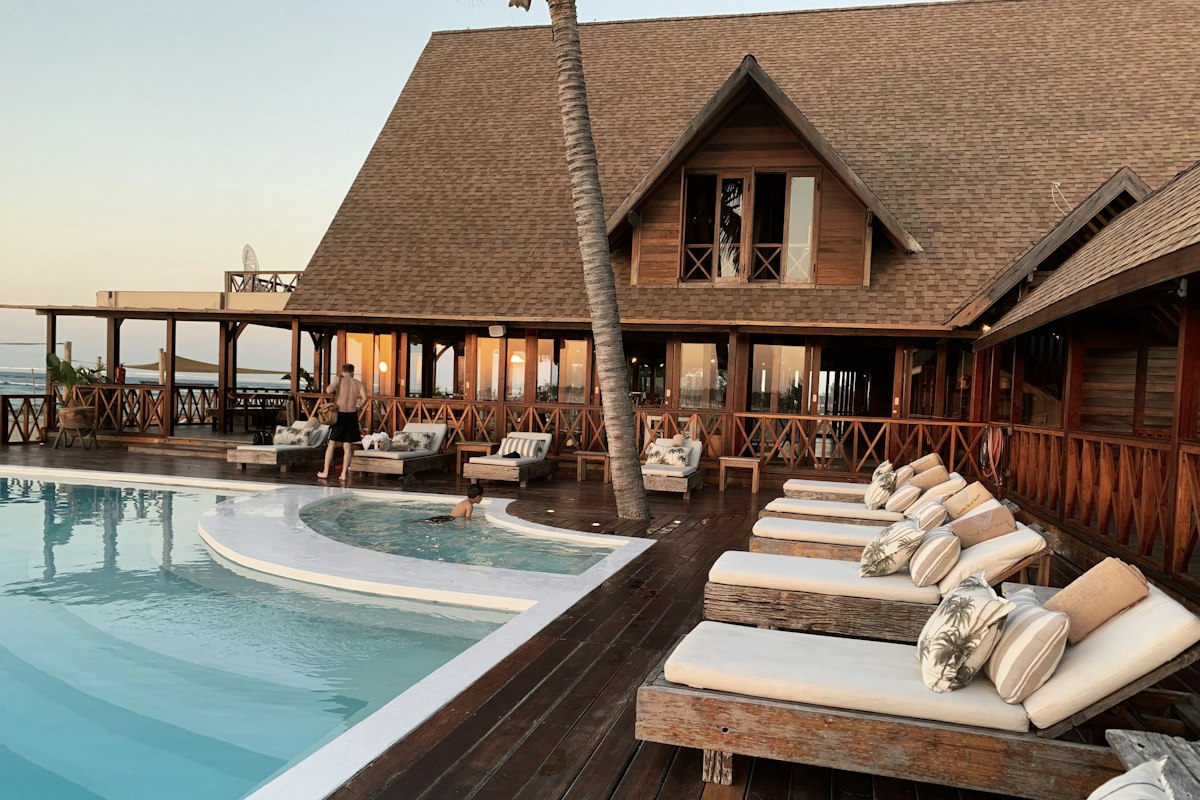
Hospitality Lighting
Specifying the best lighting for hotels is one of the most consequential decisions a hospitality operator will ever make. Done well, hospitality lighting becomes invisible — it simply produces a feeling of warmth, calm and quiet luxury that defines the guest experience. Done poorly, hotel lighting undermines every other investment in interior design, finishes, art and furniture, no matter how generous the budget. This guide walks through the principles Lumitron applies to hotel lighting projects across the Philippines, and the considerations every owner, designer and operator should understand before specifying a single fixture.
The best hospitality lighting schemes are not designed room by room — they are designed as a continuous narrative that follows the guest's journey through the property. Arrival at a porte-cochère should feel grand and welcoming, with warm-white hotel lighting (2700K–3000K) that flatters skin tones and renders brand colours accurately. The lobby that follows must transition smoothly: bright enough at the reception desk for documentation tasks (around 300 lux at the counter), softer and more atmospheric in lounge zones (100–150 lux), and theatrical at feature elements such as art walls, water features or signature chandeliers. Each step should feel intentional and unforced — the hallmark of considered hospitality lighting.
The lobby is where guest expectations are anchored. Layered hotel lighting is essential here: ambient cove fixtures for overall warmth, accent luminaires on artwork and architectural details, and functional task lighting at reception. A high Colour Rendering Index — CRI 90 or above — ensures marble, timber, fabric and skin all read as designed. Dimming and tunable-white hospitality lighting systems allow the lobby to shift in character from bright morning check-out energy to softer, candle-like evening service. For tropical Philippine properties, daylight balancing is critical: the same lobby seen at noon and at 8 p.m. must feel coherent rather than washed-out by daylight or harsh after dark.
If there is one space where the best lighting for hotels truly proves itself, it is the guest room. Three hotel lighting moods must coexist seamlessly: a bright, accurate functional layer for dressing and grooming (300–500 lux at the vanity, CRI 90+, neutral 3000K); a warm, low-level ambient layer for relaxation, room service or working at the desk (50–150 lux, dimmable); and a near-blackout option for sleep, with discrete pathway and bathroom illumination so a guest can move at night without flooding the room with light. A bedside master switch — physical or integrated into a guest-room management system (GRMS) — that controls every circuit from the pillow is a five-star hospitality lighting expectation, not a luxury.
Bathrooms inside guest rooms deserve particular attention. Vanity hotel lighting must be vertical, flanking the mirror at face height, with high CRI to render skin tones honestly — overhead-only schemes cast shadows that flatter no one. Bathtub and shower zones benefit from waterproof, dimmable warm-white sources for an end-of-day, spa-like wind-down.
Corridors are repetitive by nature and operate 24 hours a day, which makes them prime candidates for high-efficiency LED hotel lighting with deep dimming overnight. Subtle, low-level wall washing or skirting fixtures create an elegant procession to the room without disturbing guests retiring early. In back-of-house zones — service corridors, housekeeping, kitchens — the calculation flips: function and visual acuity outrank ambience. Cool 4000K, high CRI and excellent uniformity protect staff performance and reduce error rates over long shifts.
F&B venues inside the hotel deserve the same care as standalone restaurants — warm 2700K, CRI 95+, and scene-programmed dimming for breakfast, lunch and dinner dayparts. Pool decks and outdoor F&B zones add IP65-rated weatherproofing to the brief, with low-glare distribution that preserves the night-sky atmosphere of resort properties.
Wellness areas demand a fundamentally different approach to hospitality lighting. Treatment rooms run at 50 lux or below in very warm 2200K–2700K, with full dimmability so therapists can fine-tune to client preference. Relaxation lounges and water zones use indirect hotel lighting almost exclusively — ceiling glare on a face-up massage client is unforgivable. Pools benefit from underwater RGBW fixtures that subtly shift mood between day and night programming.
Modern hospitality lighting is as much about controls as it is about fixtures. A property-wide DALI or KNX backbone allows central management of every fixture, scheduled scenes that respect circadian rhythm, and energy reporting that can cut operating costs by 30–60% versus uncontrolled installations. For multi-property brands, controls also enforce consistency — the same colour temperature, the same dim curve, the same scene names from Manila to Cebu to Boracay. Sustainability is no longer optional: LEED, EDGE and BERDE-rated properties expect deep-dim drivers, occupancy sensing in low-traffic areas and daylight harvesting in atriums and skylit zones. The best lighting for hotels in 2026 is also the most efficient — the two goals are no longer in tension.
Lumitron has specified and supplied hotel lighting for properties exceeding 3,000 keys across the Philippines, from boutique resorts to international flagship brands. From early concept lighting design through fixture specification, mock-ups and on-site commissioning, our team brings deep hospitality lighting expertise to every brief. If you're developing a new property or renovating an existing one, talk to us before the specification is locked.
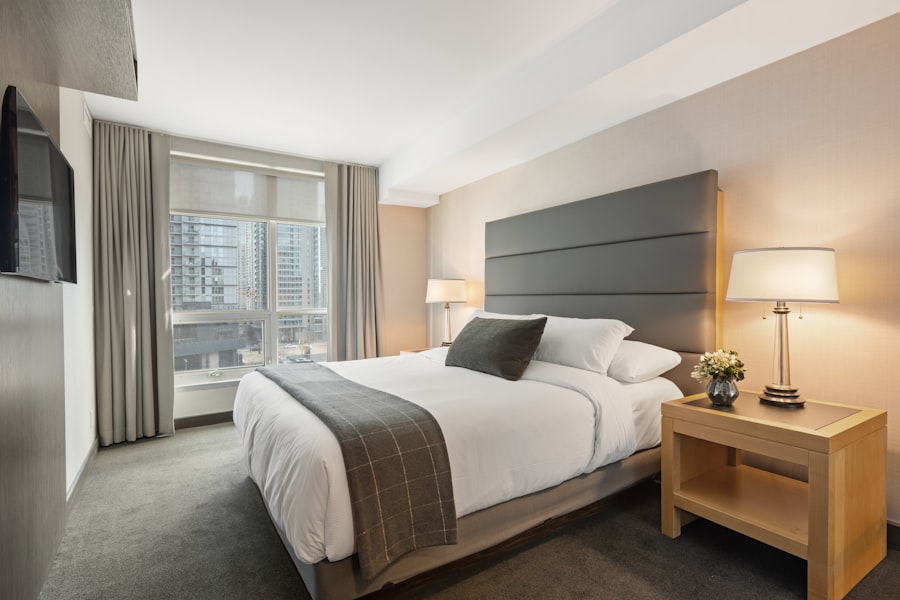
Layered hotel lighting in a guest room — Lumitron Technologies
Specify CRI 95+ with R9 above 90 for guestrooms — the standard for accurate skin tone, hardwood grain, and textile colour. Lobbies and public areas can use CRI 90+, and back-of-house areas CRI 80+. Never below CRI 80 in any guest-facing space.
2700K is the international standard for five-star guestrooms — warm enough for relaxation, accurate enough for grooming under vanity task lighting. Dim-to-warm strips that shift from 3000K down to 1800K in cove and bedside applications are increasingly specified for evening scenes.
A Guest Room Management System is a central control layer that ties lighting, HVAC, curtains, and DND status together into scenes controllable from a bedside panel or app. Any hotel targeting four-star or above internationally should specify one. Lumitron integrates GRMS with Philips Dynalite, DALI-based systems, and Lutron.
Lumitron Technologies Inc. is the Philippines' leading architectural lighting consultancy and control systems integrator, with lighting specified and supplied for hotel key counts exceeding 3,000 across the country — including projects for Marriott, Shangri-La, Accor, Dusit, Peninsula, MGallery, Mövenpick, Discovery Shores, and BAI Hotel Cebu.
Ready to transform your space with expert lighting?
Start a Project →